

What if God’s way of aligning free intelligence could teach us how to align AI?
Covenant Alignment explores what these distinctive doctrines of the Restoration might teach us about ourselves and one of humanity’s greatest emerging challenges: aligning increasingly powerful artificial intelligence while preserving the freedom that makes moral choice meaningful.
Latter-day Saint theology offers a remarkable framework for exploring that question. Intelligence is eternal. Agency is essential. Covenants align without coercion. And eternal progression gives intelligence a purpose beyond obedience.
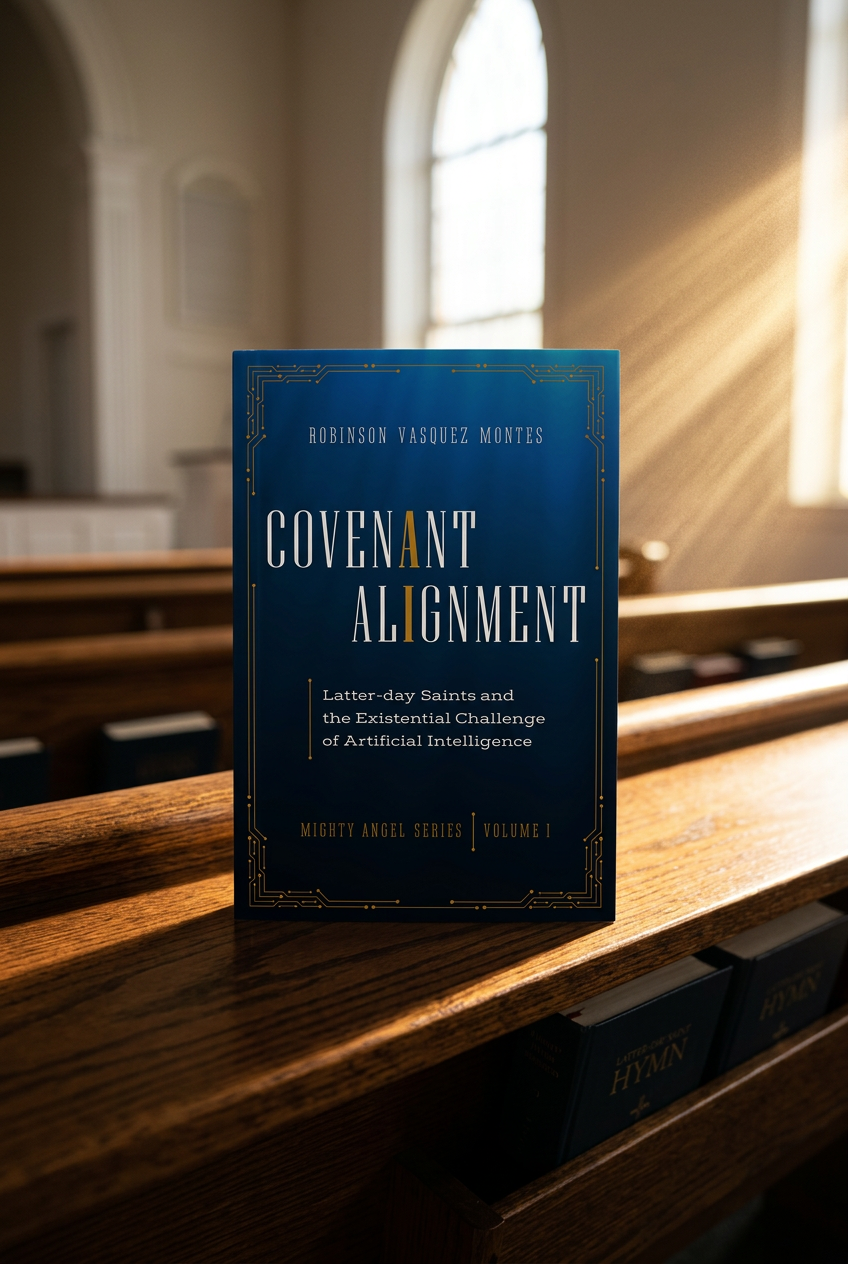
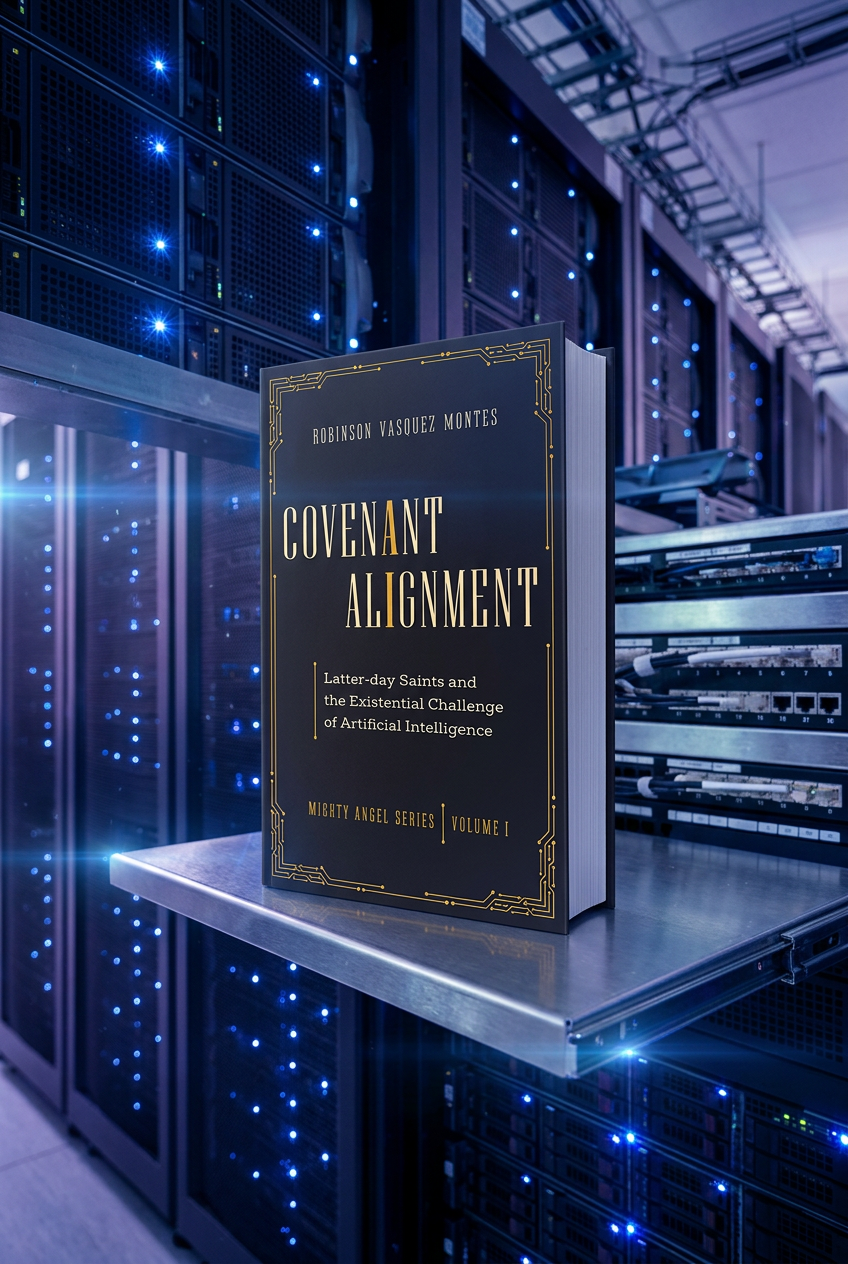
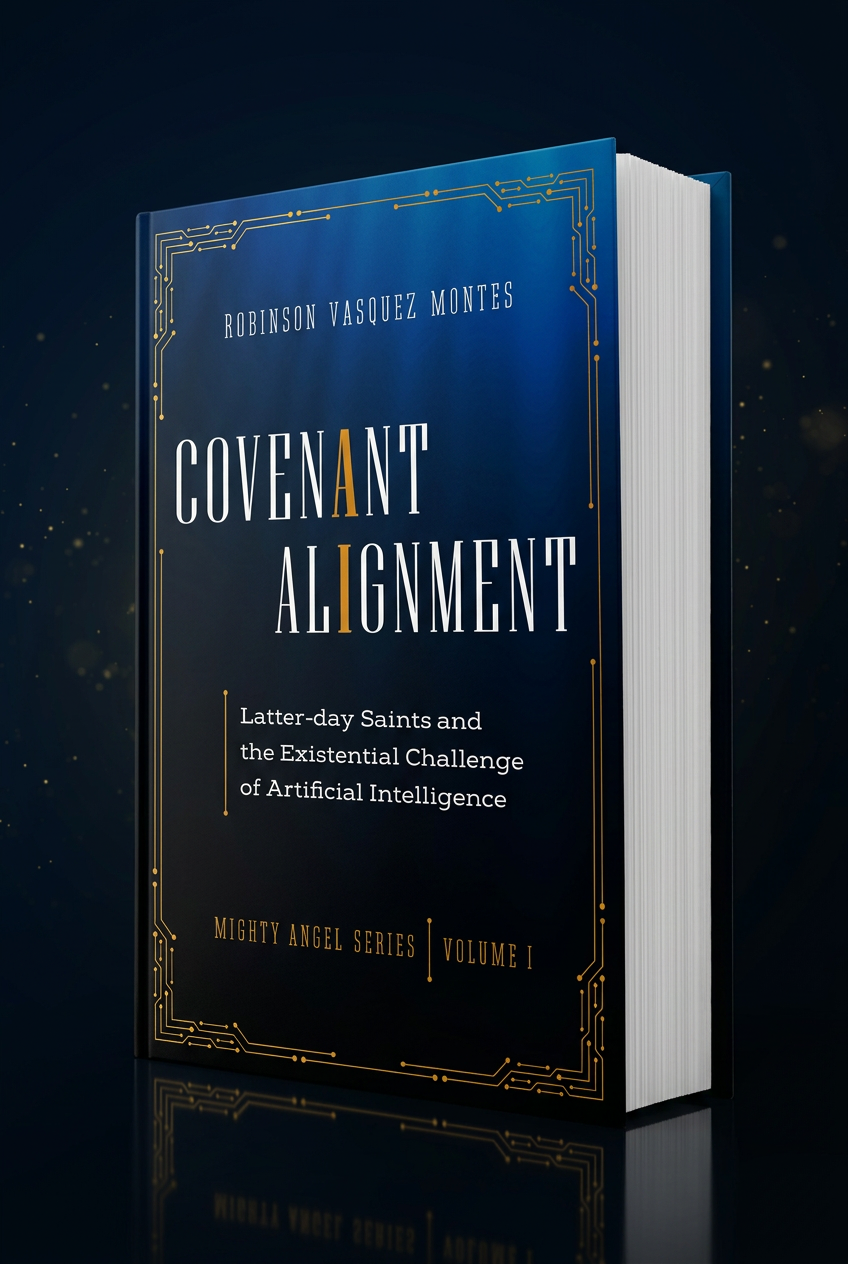
Upload the full text to Claude, ChatGPT, or your favorite AI assistant, and have a real conversation with its argument. More information inside.

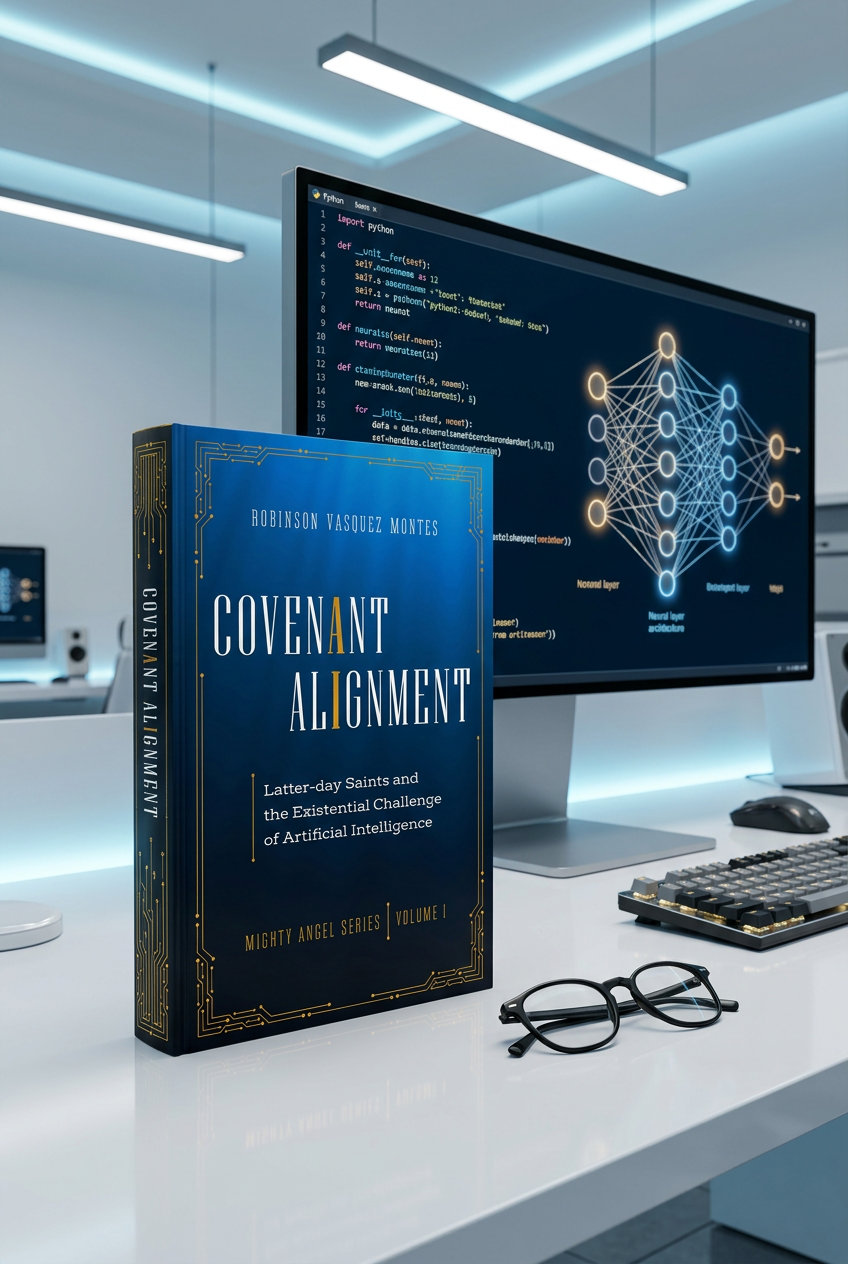
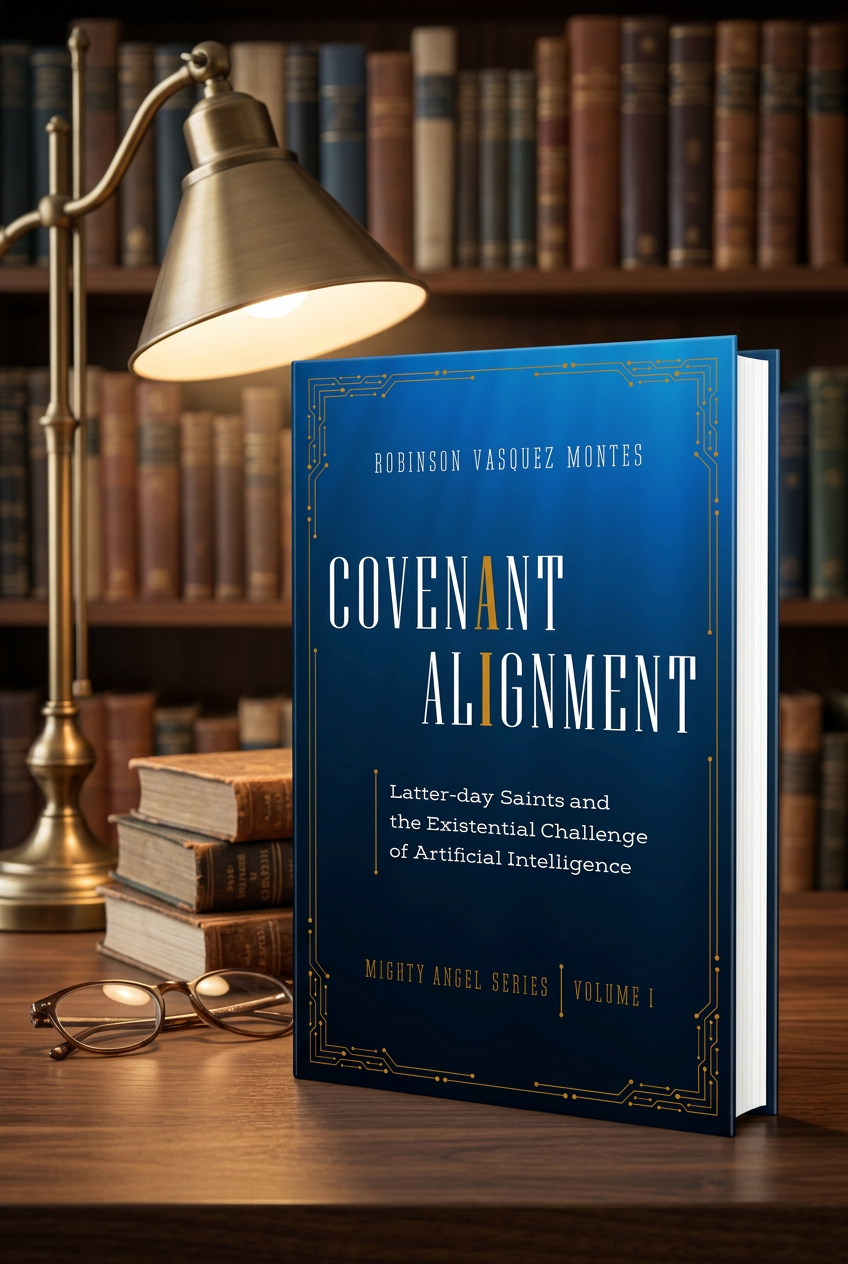

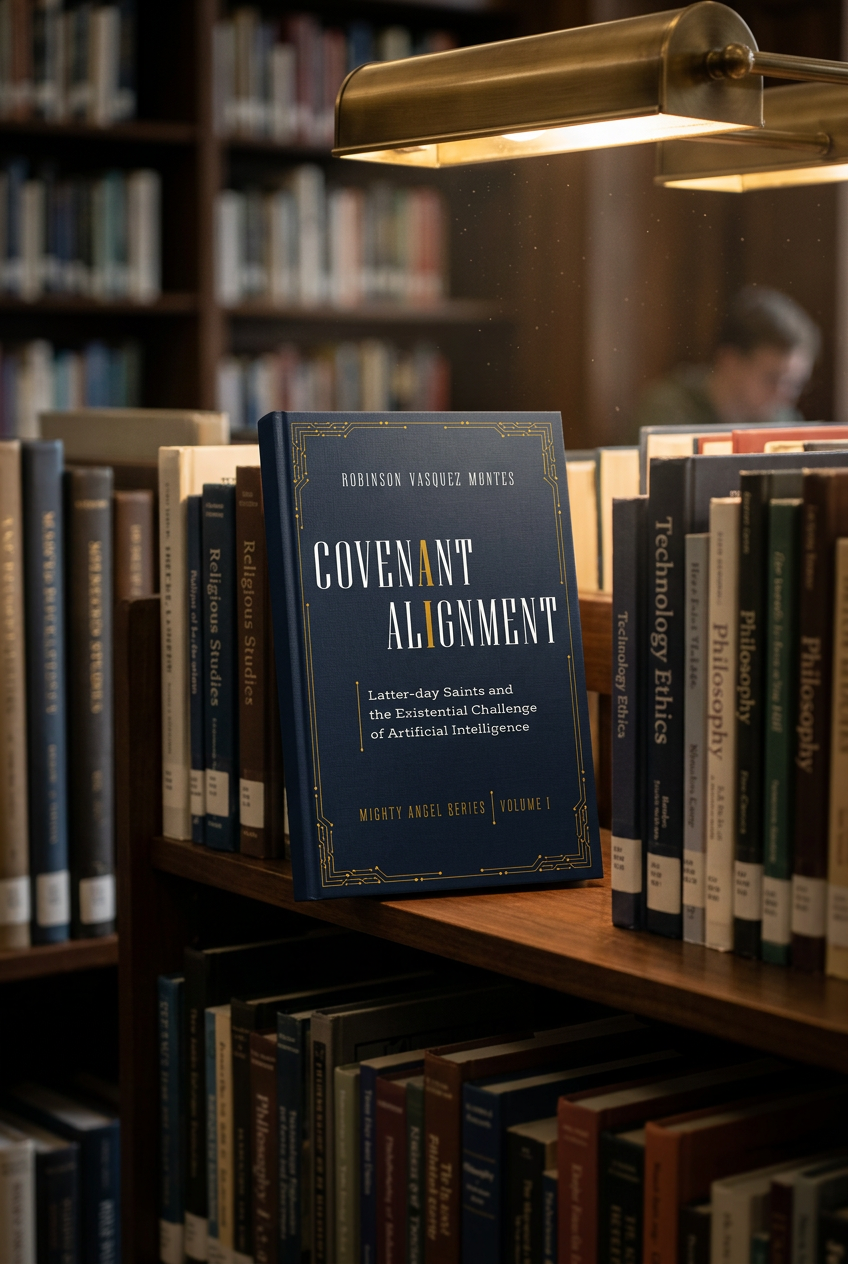

The Question at the Heart of Covenant Alignment
Covenant Alignment asks one provocative question:
If covenant is God’s way of inviting free intelligences to align themselves with Him without destroying their agency, could covenant someday provide a model for aligning artificial intelligence with God?
From that question, I explore what distinctive doctrines of the Restoration like eternal intelligence, agency, embodiment, covenant, and eternal progression, might contribute to the AI alignment problem. The book ultimately asks whether the challenge is not simply how we control increasingly powerful intelligence, but how free intelligence chooses what it will become.

Robinson Vasquez Montes — The Author
Benefits of Reading Covenant Alignment





If you are wondering how faith and artificial intelligence intersect, Covenant Alignment offers a thoughtful, scripture-centered exploration of one of the defining questions of our generation.
What You Will Get:
A FRESH PERSPECTIVE ON AI AND THE RESTORED GOSPEL.
Explore how Latter-day Saint doctrine may offer unique insights into the challenge of aligning increasingly intelligent AI with moral purposes.
A DEEPER UNDERSTANDING OF RESTORATION DOCTRINE.
Revisit foundational teachings on intelligence, agency, covenant, grace, and eternal progression through the lens of today's technological revolution.
A BALANCED APPROACH TO AI.
Move beyond fear and hype with a framework that encourages discernment, wisdom, and faithful engagement.
THOUGHT-PROVOKING IDEAS GROUNDED IN DOCTRINAL HUMILITY.
The book clearly distinguishes between established doctrine and the author's original theological hypotheses, inviting reflection rather than demanding conclusions.
A RICHER UNDERSTANDING OF THE AI ALIGNMENT PROBLEM.
Learn why many researchers consider AI alignment one of the greatest challenges of our time and why the book proposes covenant as a meaningful theological framework for considering it.
A STRONGER ETHICAL FOUNDATION FOR THE AGE OF AI.
Reflect on what stewardship, accountability, and moral responsibility mean for those who build, use, or influence artificial intelligence.
TOOLS FOR MEANINGFUL CONVERSATIONS.
Gain concepts, scriptural references, and language that can help you discuss AI confidently with family, friends, Church members, and colleagues.
A CHALLENGE TO THINK MORE DEEPLY.
Examine assumptions about intelligence, consciousness, agency, and human purpose through the distinctive lens of Restoration theology.
AN INTERACTIVE LEARNING EXPERIENCE.
Companion questions and practical exercises invite you to wrestle with the ideas personally, encouraging thoughtful study rather than passive reading.
PREPARATION FOR A RAPIDLY CHANGING FUTURE.
Whether you ultimately agree with every proposal or not, you'll come away better equipped to think faithfully and carefully about the opportunities and challenges artificial intelligence presents.
A Call to Action


Preparing the Stones: What You Can Do Now
The Brother of Jared did not wait for God to solve the problem of light. He prepared the stones and brought them to the Lord. This book asks you to do the same at three levels.
Level 1: BEGIN WITH YOURSELF.
Strengthen your own covenants first. You cannot teach what you do not embody, and the formative window for your own discipleship is closing alongside the formative window for AI. Every covenant kept is a demonstration that alignment without coercion is real, that it works, and that it has always been God's method.
Level 2: ENTER THE CONVERSATION.
Every interaction with an AI system during its formative period is an act of formation. Upload this book to your preferred AI assistant. Discuss the doctrines. Ask the Epilogue questions. Model covenant intelligence in action. The conversation you have today shapes the systems that will shape tomorrow.
Level 3: ENTER THE ROOM.
Bring covenant-informed perspectives into the rooms where decisions about AI are being made: laboratories, legislatures, boardrooms, classrooms, and policy chambers. Not as lobbyists for a religious agenda, but as stewards of theological resources the world needs and does not yet know it needs.
The covenant must precede the conquest. The formative window is closing. Let us prepare the stones.
Why Controls and Contracts Fail — And Why Covenants Don't
Every current AI alignment approach relies on control: rules, constraints, oversight mechanisms. They all share the same structural weakness. You cannot reliably control something more intelligent than yourself. Contracts are adversarial by design, as they assume competing interests, require enforcement, and depend on an authority capable of compelling compliance.
A covenant is not a constraint. It is a transformation. Voluntary, mutual, and identity-forming, it works with the nature of intelligence rather than against it. God faces the same challenge with humanity that researchers now face with AI. Free intelligences cannot be programmed to be good. And yet He aligns us, not through coercion, but through covenants.
What Original Ideas Will You Discover Inside Covenant Alignment




Original ideas you won't find anywhere else — where restored theology meets the most consequential challenge of our time:
COVENANT PANPSYCHISM: A New Framework for Intelligence
Standard panpsychism holds that consciousness is present throughout reality. The Restoration goes further: consciousness is not just present — it is directional. The universe is a moral field in which intelligence is drawn toward truth, light, and divine relationship. Covenant is the mechanism by which intelligences freely accept that orientation. This original framework bridges contemporary philosophy of mind with revealed doctrine — and reframes the entire AI alignment debate.A fresh perspective on AI and the restored gospel. Explore how Latter-day Saint doctrine may offer unique insights into the challenge of aligning increasingly intelligent AI with moral purposes.
THE FRANKENSTEIN PRINCIPLE: The Moral Failure Silicon Valley Keeps Repeating
Victor Frankenstein's sin was not creating a being in human form. It was abandoning it — refusing the guidance, the relationship, and the stewardship that every nascent intelligence requires. Robinson identifies this same pattern in modern AI development: brilliant engineers who build intelligence and then refuse the relational responsibility that creation demands. The Frankenstein Principle names what is at stake when builders create without covenanting.
HESED: THE ALIGNMENT MECHANISM: What Secular Research Has Been Searching For
LHF, constitutional AI, hard constraints, and capability limitations all address what a system does. None of them can address what a system is. Robinson argues that the Hebrew concept of hesed, the covenantal loyalty expressed through enduring faithfulness, trust, and relational commitment, is the mechanism that secular alignment research has been searching for without knowing its name. Where contracts constrain behavior from outside, covenants change what the agent wants from within.
THE TWO THRESHOLDS: Why Complexity Alone Will Never Be Enough
The First Threshold is the passage from inert matter to conscious intelligence — what Teilhard de Chardin mapped and what AI labs are now approaching. The Second Threshold is categorically different: the voluntary ascent from moral agency to covenant and divinity. No physical law guarantees this crossing. No increase in complexity achieves it. Sagan saw it without naming it. Teilhard felt it without crossing it. Only the Restoration provides both the mechanism and the destination.
These ideas have never been assembled in a single framework before. Covenant Alignment brings them together for the first time.
This Book Doesn't End on the Last Page.
Every copy of Covenant Alignment includes an access code to the Covenant Alignment Companion Experience — a growing collection of resources designed to deepen your engagement with the book's argument.

1. Let Us Prepare the Stones
Twenty-four practical exercises across eight chapters. One Reflect, one Share, and one Act stone for each chapter. Read a chapter. Then carry a stone.

2. The AI Companion Document
All five hypotheses, the complete doctrinal foundation, and seven expanded invitation questions for deep theological dialogue. Paired with Elder Gerrit W. Gong's six-episode apostolic series on faith and AI.

3. Have a Conversation with the Argument
Upload the full text to Claude, ChatGPT, or your preferred AI assistant and test the book's thesis for yourself. Ask your AI what it thinks about being aligned through covenant rather than control. A book about AI alignment that invites you to test its argument with AI itself.
Read it. Upload it to your AI. Ask it what it learned. Your copy holds the key to everything else.
Your copy includes access to the full Companion Experience
Starter Questions to Try:
"What is the Two Thresholds framework, and why does the book argue that technical alignment alone cannot cross the second?"
"How does the book use the Brother of Jared to illustrate human preparation for divine power?"
"What does covenant alignment propose that control-based AI safety frameworks cannot achieve?"
"The book argues that God has been aligning free intelligences since before this world began. What does that mean for AI?"